
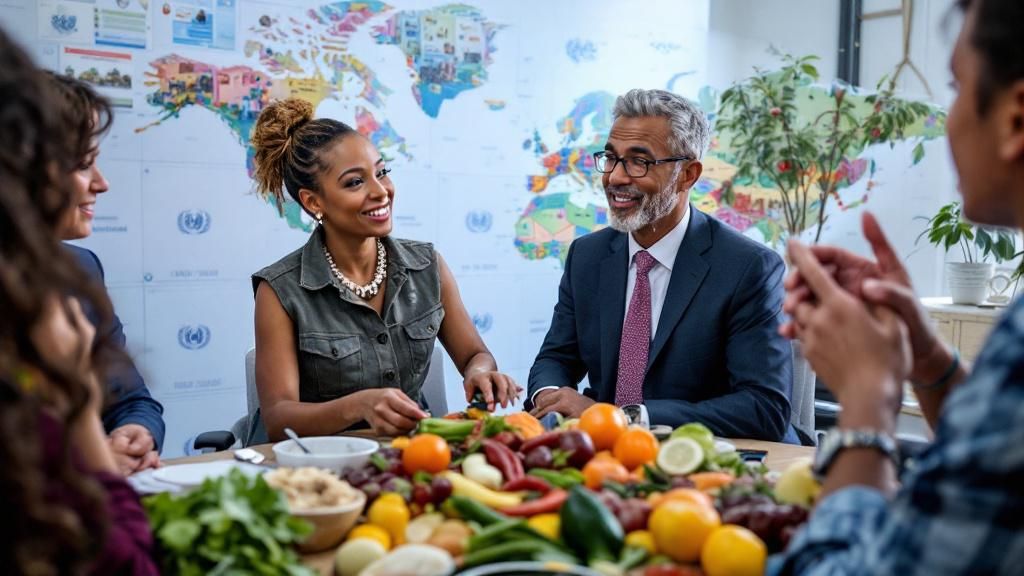
The United Nations has launched an far-reaching initiative intended to address the ongoing worldwide crises of poverty and hunger that persistently affect millions across the globe. This extensive initiative constitutes a pivotal moment in international development, integrating creative solutions, major financial investments, and collaborative efforts from participating nations to generate sustainable impact. The initiative tackles underlying factors whilst delivering short-term support, promising to reshape how the global community engages with these interconnected problems. Discover how this pioneering method seeks to revolutionise lives and create a fairer world.
Worldwide Action on Poverty Challenges
The United Nations’ most recent initiative constitutes a watershed moment in the global battle with poverty and hunger. By mobilising resources across several continents and engaging both developed and developing nations, the UN seeks to create a unified approach that transcends traditional boundaries. This collaborative approach acknowledges that hunger and poverty are interconnected challenges demanding coordinated effort. The programme brings together national governments, non-governmental organisations, and commercial partners to ensure broad reach and lasting results across disadvantaged areas.
Member states have committed to unprecedented levels of collaborative work, providing financial support and technical expertise to strengthen current initiatives. The programme stresses openness and responsibility, establishing specific measures to assess progress and impact. By drawing on existing infrastructure and expanding on successful regional models, the UN works to improve efficiency and minimise duplication of efforts. This coordinated approach guarantees that support goes to those most in need whilst building resilient systems capable of tackling upcoming challenges effectively.
Rapid Action Frameworks
The initiative’s initial stage prioritises crisis support and swift action in territories affected by acute food insecurity and acute hardship. Emergency food supplies, healthcare support, and temporary shelter programmes are being deployed to vulnerable areas within weeks. The UN has established quick-action units supplied with means to examine on-site situations and adapt measures accordingly. These critical steps aim to preserve life whilst sustained strategies are being established, confirming at-risk communities receive critical support swiftly.
Financial funding channels have been streamlined to expedite aid distribution to frontline organisations working within affected areas. Local community partners and leaders are being given greater authority to establish urgent requirements and allocate funds effectively. Training programmes for distribution personnel ensure that assistance gets to target recipients whilst preserving respect and cultural awareness. These swift measures serve as a link between emergency response and sustainable development, creating breathing space for communities to stabilize and start rebuilding.
Sustained Strategic Goals
The programme creates challenging goals for poverty reduction and enhancing food security over the coming decade. Strategic investments in agricultural infrastructure, learning and development, and healthcare systems aim to target fundamental causes of poverty rather than merely treating symptoms. The UN has committed to assist small-scale farmers through sharing technological expertise and trading access schemes, helping them to enhance yields without harming the environment. These foundational investments establish routes for local populations to attain economic independence and economic independence whilst preserving environmental resources.
Sustained success demands organisational reinforcement and capacity building within government bodies and community-based entities. The programme prioritises workforce training, governance improvements, and broader economic expansion to establish resilient economies equipped to withstand emerging crises. By encouraging business creation and promoting inclusive growth, the initiative aims to produce lasting job prospects. These strategic investments represent a fundamental shift towards enabling local populations to shape their future direction, guaranteeing lasting transformation outside the initiative’s formal timeframe.
Implementation and Partnership Framework
The UN’s initiative works within a multi-tiered implementation strategy that involves governments, independent organisations, and commercial stakeholders. By creating coordination offices across Africa, Asia, and Latin America, the programme delivers context-specific responses that respond to regional needs. This distributed model supports rapid response capabilities whilst maintaining supervision from UN headquarters. Collaborations with global development organisations deliver essential funding tools, supporting long-term development projects that generate jobs prospects and improve food systems frameworks throughout vulnerable regions.
Success relies essentially on authentic partnership between industrialised and emerging nations, with open oversight mechanisms ensuring resources get to intended beneficiaries. The framework includes skills development initiatives that strengthen local institutions and empower communities to become self-sufficient. Continuous evaluation through external reviews and community feedback mechanisms upholds programme quality and effectiveness. By cultivating sustained relationships rather than temporary aid arrangements, the UN initiative seeks to create systemic change that disrupts cycles of deprivation and food insecurity, ultimately developing resilient societies capable of sustainable development.
